Metal Options for Low-Slope Roofs
Certain metal systems suit low slope roofs, and knowing the options helps a Spyglass Falls homeowner. Here are the choices for a shallow pitch.
Mechanically Seamed Standing Seam
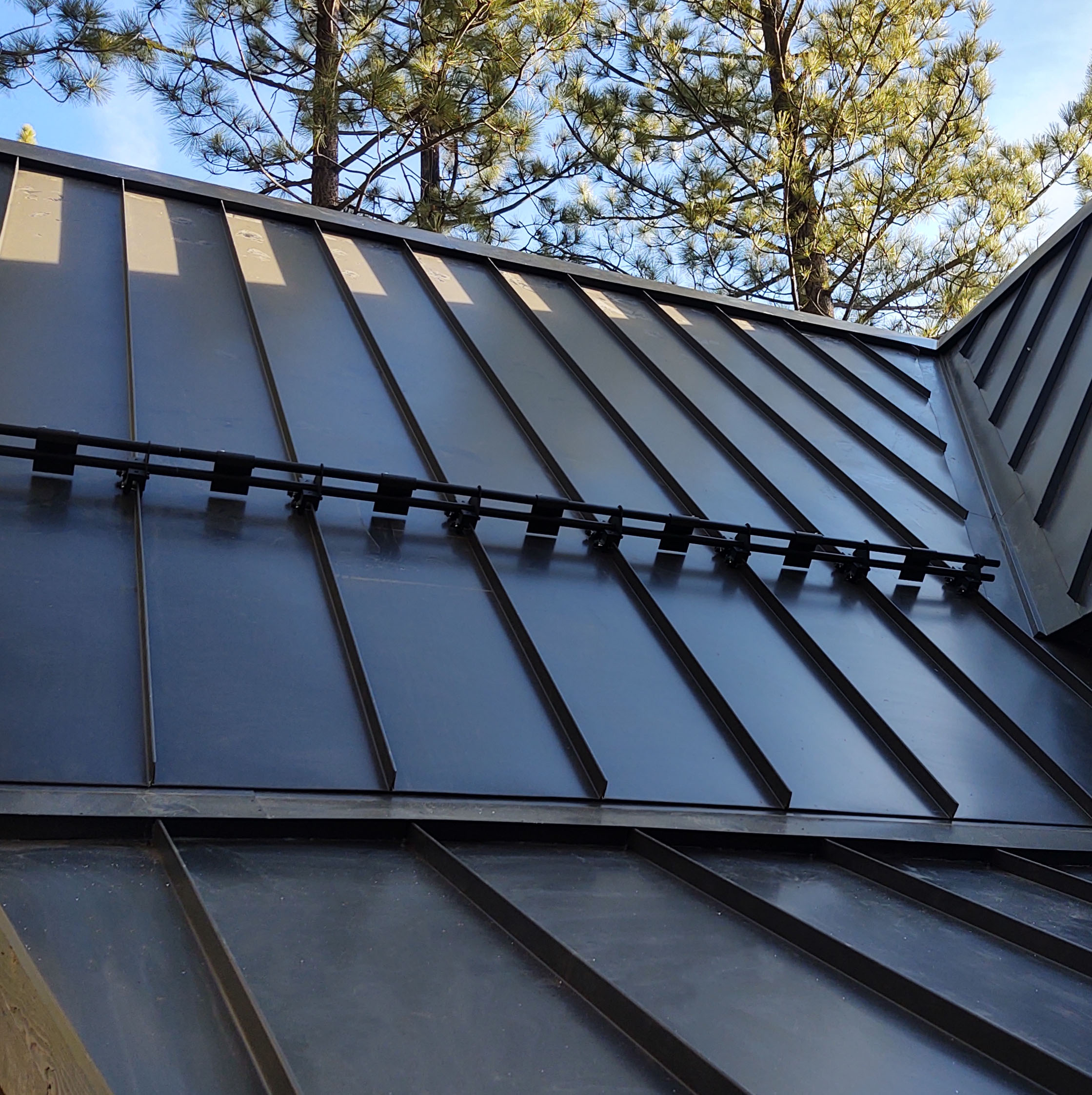
Mechanically seamed standing seam is often the leading choice for low slope roofs, since its tight, crimped seams provide excellent water resistance, allowing standing seam to be used at slopes below what other systems allow. For a low slope roof wanting metal, this system is frequently the appropriate option. Its tight seam suits the shallow pitch. It is the go to for low slopes. It handles shallow pitches well. It is the common choice.
Why Standing Seam Suits Low Slopes
Standing seam suits low slopes because its concealed fastener, raised seam design, especially when mechanically seamed, sheds water effectively without exposed penetrations that could leak on a shallow pitch. The tight seams keep water out where a shallow slope gives it more opportunity to penetrate. This water shedding design is why standing seam works on low slopes. It seals tightly. It resists water on shallow pitches. It performs where slope is limited.
Considerations for Other Systems
Exposed fastener metal systems generally need more slope, since their fasteners and seams may not provide the water resistance a very shallow pitch requires, so they are less suited to low slopes. For a low slope roof, an exposed fastener system may not be appropriate. Other systems have slope requirements. They suit steeper pitches. They are less fit for low slopes. The slope limits their use.
The Role of Proper Detailing
On low slopes, proper detailing and installation are especially important, since the shallow pitch demands careful sealing of seams, edges, and penetrations to keep the roof watertight. A low slope metal roof depends on meticulous work. Proper detailing is critical on shallow pitches. It ensures water resistance. The installation must be precise. It matters greatly on low slopes.
Choosing the Right Option
The right option for a low slope roof depends on the specific slope and the roof, with a contractor experienced in low slope metal roofing determining the appropriate system. For most low slope metal roofs, mechanically seamed standing seam is a strong choice, with the contractor confirming suitability. Matching the option to the slope is key. The choice fits the pitch. A contractor guides it. It depends on the specifics.
Low-Slope Options, in Short
Mechanically seamed standing seam is often the leading choice for low slope roofs, since its tight seams shed water effectively where a shallow pitch demands it, while exposed fastener systems generally need more slope. Proper detailing is especially important on low slopes.
One point worth making clear for Spyglass Falls homeowners is that roof slope, the steepness of the pitch, is one of the most important factors in metal roofing, and it is especially consequential for low slope and nearly flat roofs because it determines which metal systems will actually keep the roof watertight. The reason comes down to how roofs shed water. A roof sheds water by directing it down the pitch, and on a steep roof, water runs off quickly and easily, giving it little opportunity to find any weak point. On a low slope roof, by contrast, water moves off much more slowly and lingers longer on the surface, which means it has far more opportunity to work its way into any seam, fastener, or detail that is not perfectly sealed. This is why a shallow pitch is more demanding and requires a roofing system that is especially watertight. Not every metal system meets that requirement. Many exposed fastener metal systems, where screws penetrate the panel face, need a certain amount of slope to perform reliably, because on a very shallow pitch those penetrations and seams may not provide enough water resistance. The system that most often suits low slopes is mechanically seamed standing seam, whose panels are joined by a tight, crimped seam formed with a seaming tool, providing the excellent water resistance a low slope demands, and whose concealed fasteners avoid exposed penetrations entirely. Because of this, standing seam can be used at lower slopes than many other systems allow. The practical upshot is that putting metal on a low slope roof is often quite feasible, but the choice of system matters enormously, and it should be made by a contractor who knows low slope metal roofing.
One point worth making clear for Spyglass Falls homeowners is that roof slope, the steepness of the pitch, is one of the most important factors in metal roofing, and it is especially consequential for low slope and nearly flat roofs because it determines which metal systems will actually keep the roof watertight. The reason comes down to how roofs shed water. A roof sheds water by directing it down the pitch, and on a steep roof, water runs off quickly and easily, giving it little opportunity to find any weak point. On a low slope roof, by contrast, water moves off much more slowly and lingers longer on the surface, which means it has far more opportunity to work its way into any seam, fastener, or detail that is not perfectly sealed. This is why a shallow pitch is more demanding and requires a roofing system that is especially watertight. Not every metal system meets that requirement. Many exposed fastener metal systems, where screws penetrate the panel face, need a certain amount of slope to perform reliably, because on a very shallow pitch those penetrations and seams may not provide enough water resistance. The system that most often suits low slopes is mechanically seamed standing seam, whose panels are joined by a tight, crimped seam formed with a seaming tool, providing the excellent water resistance a low slope demands, and whose concealed fasteners avoid exposed penetrations entirely. Because of this, standing seam can be used at lower slopes than many other systems allow. The practical upshot is that putting metal on a low slope roof is often quite feasible, but the choice of system matters enormously, and it should be made by a contractor who knows low slope metal roofing.
It also helps Spyglass Falls homeowners to understand that even the metal systems best suited to low slopes have their limits, and that a genuinely flat roof is a special case that may call for something other than standard metal panels, so an honest assessment of the actual slope is the essential starting point. While mechanically seamed standing seam can handle lower pitches than most systems, it still has minimum slope considerations, because a roof needs at least some pitch to shed water at all. A truly flat roof, one with essentially no slope, presents a different problem, since water has nowhere to run, and such a roof may be better served by a membrane or another flat roof system specifically designed to keep water out where there is no pitch to shed it. This is why a contractor experienced in low slope work begins by assessing the roof's actual slope, because the specific pitch determines which systems are appropriate and whether metal panels suit the roof at all, and an honest contractor will tell a homeowner when a different roofing approach would serve their flat roof better. Beyond choosing the right system for the slope, a low slope metal roof depends heavily on the quality of the installation, because the shallow pitch leaves little margin for error, so the seams, edges, and penetrations must be sealed meticulously and the vulnerable details handled with care, since these are exactly the spots where slowly shedding water will find any weakness. For all these reasons, a low slope or flat metal roof is a project where the experience of the contractor matters a great deal, both in selecting an appropriate system and in executing the precise, careful work that keeps a shallow pitch roof watertight over the long term.
Find Your Low-Slope Option
Spyglass Falls Metal Roofing installs metal roofing suited to low slope roofs across Spyglass Falls and Hamilton County. Call (765) 676-3491 for a free consultation on the right metal system for your low slope or flat roof.